Watch a good cleaner work for five minutes and you'll notice something: they never backtrack. No wiping a bench twice, no doubling back for a forgotten cloth, no starting the vacuum before the dusting's even finished. It looks almost lazy, in the way efficient work often does: a steady path from one end of the room to the other, with nothing repeated.
That's not luck or natural tidiness. It's a handful of habits, repeated on every job, that add up to a clean that actually holds. Here are the professional cleaning tips we rely on ourselves, the order pros work in, and the small things that separate a proper clean from a rushed one.
Top to Bottom, Every Time
Dust falls. Spray drips. Crumbs land on the floor eventually, no matter how careful you are. So the order matters more than most people think: ceiling fans and light fittings first, then shelves and benchtops, then skirting boards, and the floor dead last. Vacuum or mop first and you're just cleaning the same floor twice, once before the dust settles on it and once after.
Left to Right, One Pass
Inside each room, a professional works a single direction around the space rather than hopping between whatever catches their eye. It sounds fussy, but it's the whole reason they don't backtrack. One lap of the room, wiping as they go, means nothing gets missed and nothing gets touched twice. Try it next time you're cleaning a bathroom: start at the door, work clockwise, finish where you began.
Two Buckets, Not One
For mopping, one bucket of dirty water spreads dirty water. Pros use two: one with cleaning solution, one with plain water for rinsing the mop before it goes back in the clean bucket. It's a small change that stops you smearing grime back across a floor you just cleaned, and it's the difference between a floor that looks clean while it's wet and one that's actually clean once it's dry.
Let the Product Do the Work
Spray and wipe straight away is the instinct, but most cleaning products need a minute or two of dwell time to actually break down grime before you touch them with a cloth. Spray the shower screen or the stovetop, walk away and do something else for a minute or two, then come back and wipe. You'll use less elbow grease and get a better result, which is a fair trade.
Colour-Coded Cloths, Never Crossed
A cloth that's touched the toilet doesn't touch the kitchen bench. Ours use colour-coded microfibre: one colour for bathrooms, another for kitchens, another for general dusting, so nothing cross-contaminates and nothing gets mixed up halfway through the job. You don't need a full colour system at home, but keeping at least one cloth strictly for the bathroom and a separate one for anywhere food gets prepared is worth the two minutes it takes to set up.
Dry as You Go
Wet glass and stainless steel dry into streaks and water spots if you leave them to air dry. A microfibre cloth run over a mirror, tap or splashback straight after cleaning takes ten seconds and skips the streaky finish altogether. It's the step that gets skipped most often at home, and it's the one that makes the biggest visible difference.
The Bits Nobody Points Out
Skirting boards. Window tracks. The gap behind the tap. The top of the fridge. These are the spots that separate a clean that looks good from a distance and one that actually holds up close. A professional checks them without being asked, because a home that's "clean" but still has a ring of dust along every skirting board isn't really clean. It just looks that way at a glance.
Pack the Kit Before You Start
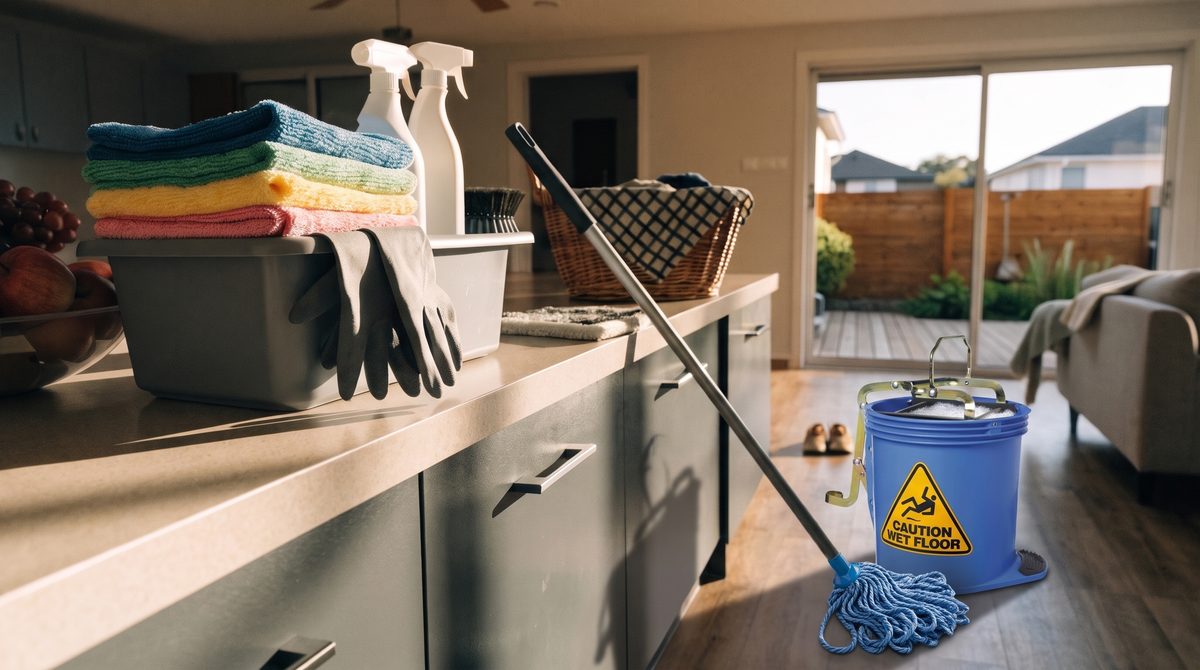
Running back and forth for a forgotten cloth or a bottle left in another room eats more time than the actual cleaning does. Pros load a caddy with everything needed for the whole job before they start: cloths, sprays, gloves, a scrubbing brush, so there's no stopping halfway through. Set your own gear out on the bench before you begin and you'll notice the same thing: fewer interruptions, faster finish.
Finish With a Walk-Through
The last two minutes of any professional clean are spent walking back through the home with fresh eyes, checking for the spot that got missed or the smear that's still there under better light. It catches the small things before you've packed up and moved on, and it's the step that turns a good clean into a finished one.
None of this needs special equipment or years of practice. It's mostly about order: doing things in the right sequence so you're not fighting the work you've already done. We use these same habits on every house clean we do, because the little things really are what separate a rushed once-over from a clean that actually lasts.
If putting this into practice every week sounds like one job too many, that's exactly what we're here for. Get a free quote and we'll bring the caddy, the two buckets and the whole routine to you.